Small business websites can use automation for contact forms, email notifications, booking flows, CRM updates, reporting, and content workflows to save time and improve operational consistency.
Category: Digital Solutions
-
Transforming Customer Experiences with Digital Innovations
Digital innovation improves customer journeys by connecting website design, automation, content, analytics, and support tools into a smoother experience from discovery to decision.
FAQ
What are customer journeys and why are they important?
Customer journeys refer to the complete experience that a customer has with a brand, from initial awareness to purchase. They are essential for improving customer satisfaction and increasing conversions.
How do digital solutions enhance customer experiences?
Digital solutions such as automation tools and analytics platforms streamline interactions, personalize experiences, and provide valuable insights into customer behavior.
What role does web design play in customer journeys?
Effective web design ensures user-friendly navigation and accessible content, critical for keeping customers engaged and guiding them to make informed decisions.
In today’s rapidly evolving digital landscape, companies can enhance customer journeys through a strategic approach that integrates innovation and effective web design. By leveraging digital tools, businesses can create seamless experiences that engage users at every touchpoint.
Understanding Customer Journeys
A customer journey maps the steps a client goes through when interacting with your brand, from initial awareness to making a purchase. Understanding these journeys is essential as they inform how businesses design their web interfaces and overall digital presence. A well-designed customer journey can significantly influence conversion rates and customer satisfaction.
- User Awareness: This stage involves the methods by which potential customers become aware of your offerings.
- Consideration Phase: Customers evaluate your brand against competitors, looking for information that differentiates you.
- Decision-Making Process: Here, users make a choice based on the information gathered, which is heavily influenced by site usability and content accessibility.
Leveraging Digital Solutions
Digital solutions encompass a wide range of tools and technologies, from analytics software to automated customer service platforms. Businesses that adopt these solutions can streamline operations and provide enhanced experiences for their consumers. This leads to improved customer communication and more efficient lead generation strategies.
- Automation Tools: Implementing automated chatbots or customer management systems can reduce response times and improve customer satisfaction.
- Analytics Platforms: These tools allow businesses to gather insights on customer behavior, guiding future marketing strategies and web improvements.
- Content Management Systems: A robust CMS aids in delivering timely and relevant content, which keeps customers engaged.
Implementing Effective Web Design Strategies
Web design is not just about aesthetics; it is a crucial element of the customer journey. A professional website design should prioritize user experience, ensuring that navigation is intuitive and content is easily accessible. Aspects like responsive design and SEO integration are essential for reaching diverse audiences.
- Responsive Design: A website must adapt to various devices, ensuring a consistent experience whether on mobile or desktop.
- SEO Best Practices: Optimizing content for search engines improves visibility and can lead to increased traffic.
- Scalability: As your business grows, your web infrastructure should be designed to scale, accommodating increased traffic without compromising performance.
For a comprehensive view of web design’s impact on engagement, explore our article on Customer Focused Web Design for Better Engagement. It offers insights on creating user experiences that resonate with your target audience.
Additionally, if you’re looking to refine your digital strategy, don’t miss our post on Digital Strategy Before Building a New Website. It covers essential steps to ensure your website meets business objectives.
To learn more about the foundational elements of web development that drive digital success, check out Modern Web Development Foundations for Growing Businesses. This guide is perfect for businesses looking to scale effectively.
The following table summarizes the key aspects of digital innovation and web design that enhance customer journeys, highlighting their benefits and examples.
Aspect Benefits Examples Automation Speeds up customer interactions Chatbots for customer service Analytics Provides insights for strategy Google Analytics for tracking SEO Increases visibility Keyword optimization in content Responsive Design Improves user experience Mobile-friendly websites -
Essential Steps for Small Enterprises in Digital Transformation
Digital transformation for small enterprises can start with a modern website, structured data, automation, analytics, online customer communication, and gradually improved internal digital workflows.
Small enterprises today face unprecedented challenges and opportunities as they embark on their digital transformation journey. This transition is crucial not only for keeping pace with competitors but also for fostering a stronger connection with customers and optimizing internal processes. The following steps outline a comprehensive approach toward achieving effective digital transformation.
1. Establish a Modern Website
A modern website serves as the cornerstone of digital transformation. It needs to be user-friendly, mobile-responsive, and optimized for search engines (SEO). An effective website should not only reflect your brand but also facilitate seamless customer journeys. Begin by ensuring your website follows the latest best practices in web development, such as using structured data to enhance visibility on search engines.
- Implement mobile responsiveness for broader accessibility.
- Optimize site speed to improve user experience.
- Use SEO techniques to enhance search rankings.
2. Integrate Customer Communication Tools
Effective customer communication is pivotal in today’s digital landscape. Utilize chatbots, email marketing, and social media platforms to maintain an open line of dialogue with your audience. These tools can enhance customer satisfaction, leading to loyalty and increased sales. Invest in automation solutions that can streamline these communications.
- Utilize chatbot technology to provide instant responses.
- Implement a CRM system to manage customer interactions effectively.
- Automate email campaigns based on customer behavior.
3. Implement Analytics for Informed Decisions
Data-driven decision-making can significantly elevate your business strategy. Employ analytics tools to gather insights about customer behavior, sales trends, and marketing effectiveness. This information is vital for adapting business strategies in real-time. Consider tools like Google Analytics, which can provide in-depth analysis of website performance.
- Track user behavior for insights on site performance.
- Analyze conversion rates to measure marketing effectiveness.
- Utilize heatmaps to identify user engagement on your site.
4. Automation and Improved Workflows
Automation can improve efficiency in various aspects of business operations. Identify repetitive tasks that can be automated to save time and reduce human error. Implementing cloud-based solutions can streamline processes and enhance collaboration among team members, making internal workflows more effective.
- Automate data entry and reporting processes.
- Use project management tools to enhance team collaboration.
- Explore cloud solutions for remote work flexibility.
To further explore how your small enterprise can build a strong digital presence, check out our article on Digital Technology Innovations for Small Enterprises. Implementing effective digital solutions can also accelerate growth; learn more about this in How Digital Solutions Help Startups Launch Faster. Additionally, discover practical Automation Ideas for your Small Business Websites through our insightful piece Automation Ideas for Small Business Websites.
FAQ
What are the initial steps for a small enterprise in digital transformation?
Start with a modern website and tools for customer communication, ensuring a responsive design and robust automation strategies.
How can automation benefit small businesses?
Automation helps reduce repetitive tasks, improving efficiency, and allowing businesses to focus on growth strategies.
Why is analytics important in digital transformation?
Analytics provides valuable insights into customer behavior and business performance, enabling data-driven decision-making.
The following table summarizes key components essential for successful digital transformation in small enterprises, outlining their benefits and examples of implementation.
Component Description Benefits Modern Website User-friendly and SEO-optimized platform Increased visibility and customer engagement Customer Communication Tools Systems to enhance interaction Improved customer satisfaction and retention Analytics Tools Tools for tracking performance and insights Informed decision-making based on data Automation Solutions Software to streamline processes Enhanced efficiency and resource allocation -
Essential Online Booking Features for Service-Based Businesses
Online booking features help service businesses reduce manual scheduling, improve customer convenience, collect important details, and connect website interactions directly to operational workflows.
In today’s fast-paced world, the ability to book services online is crucial for customer satisfaction and retention. Online booking systems provide numerous advantages for service businesses, streamlining administrative tasks and freeing up time to focus on delivering quality service. These platforms help reduce no-shows, simplify the booking process, and allow customers to choose time slots that fit their schedules. Moreover, they gather vital customer information effortlessly during the booking process.
Integrating an online booking solution with operational workflows allows for better resource management and planning. By linking these systems with calendar applications, service providers can optimize their schedule based on previous bookings and anticipated demand. This foresight enables businesses to maximize their service availability and efficiently allocate their resources. Furthermore, analytical tools can provide insights into customer behavior, revealing patterns that can enhance service delivery.
There are several types of online booking tools that fit various service industries, from beauty salons to wellness centers, and even consulting firms. Here are a few popular online booking platforms:
- SimplyBook.me – Ideal for small to medium businesses with customization options.
- Square Appointments – A free option that is particularly helpful for those already using Square for transactions.
- Calendly – Excellent for businesses that rely on one-on-one appointments and meetings.
- Booksy – Great for beauty and wellness professionals looking to handle appointments, marketing, and payments.
When implementing these systems, businesses should consider important features that elevate their effectiveness. Customization options should allow the service provider to tailor the user experience, while automated reminders can help reduce missed appointments. Additionally, payment processing integration is essential for a seamless customer experience and financial management.
As service businesses embrace digital solutions, the future of online booking looks promising. Innovations such as AI-driven scheduling and enhanced user interfaces are on the horizon, setting a new standard for customer engagement. By continuing to evolve and improve online booking experiences, service businesses can ensure they remain competitive and relevant in a digital-first economy.
For an expanded view on automating business processes, explore our article on Automation Ideas for Small Business Websites. Online booking systems are a key part of online solutions for local service providers, ensuring customers have access to the services they need.
To learn more about enhancing your website’s functionality, check out our guide on How Better Navigation Improves Business Websites. Integrating these booking systems can create an effective online presence, thus elevating your operational efficiency.
FAQ
What are online booking features?
Online booking features include scheduling interfaces that allow customers to book appointments or services seamlessly and conveniently through a business’s website or app.
How can online booking improve customer satisfaction?
By enabling customers to book services at their convenience, reducing wait times, and providing instant confirmations, online booking enhances the overall customer experience.
What types of businesses benefit from online booking systems?
Online booking systems are beneficial for a variety of service-oriented businesses, including salons, gyms, tutoring services, medical practices, and consulting firms.
This table illustrates the comparative advantages of various online booking systems, highlighting their core functionalities and target user base for better decision-making.
Platform Core Features Ideal For Pricing SimplyBook.me Customizable booking interface, automated reminders Service-based businesses of all sizes Starts free, paid plans available Square Appointments Integrated payment processing, calendar sync Small business owners using Square Free for individuals, monthly fees for teams Calendly Simple scheduling, time zone detection Freelancers and consultants Free with premium options Booksy Appointment management, marketing tools Beauty and wellness professionals Monthly subscription 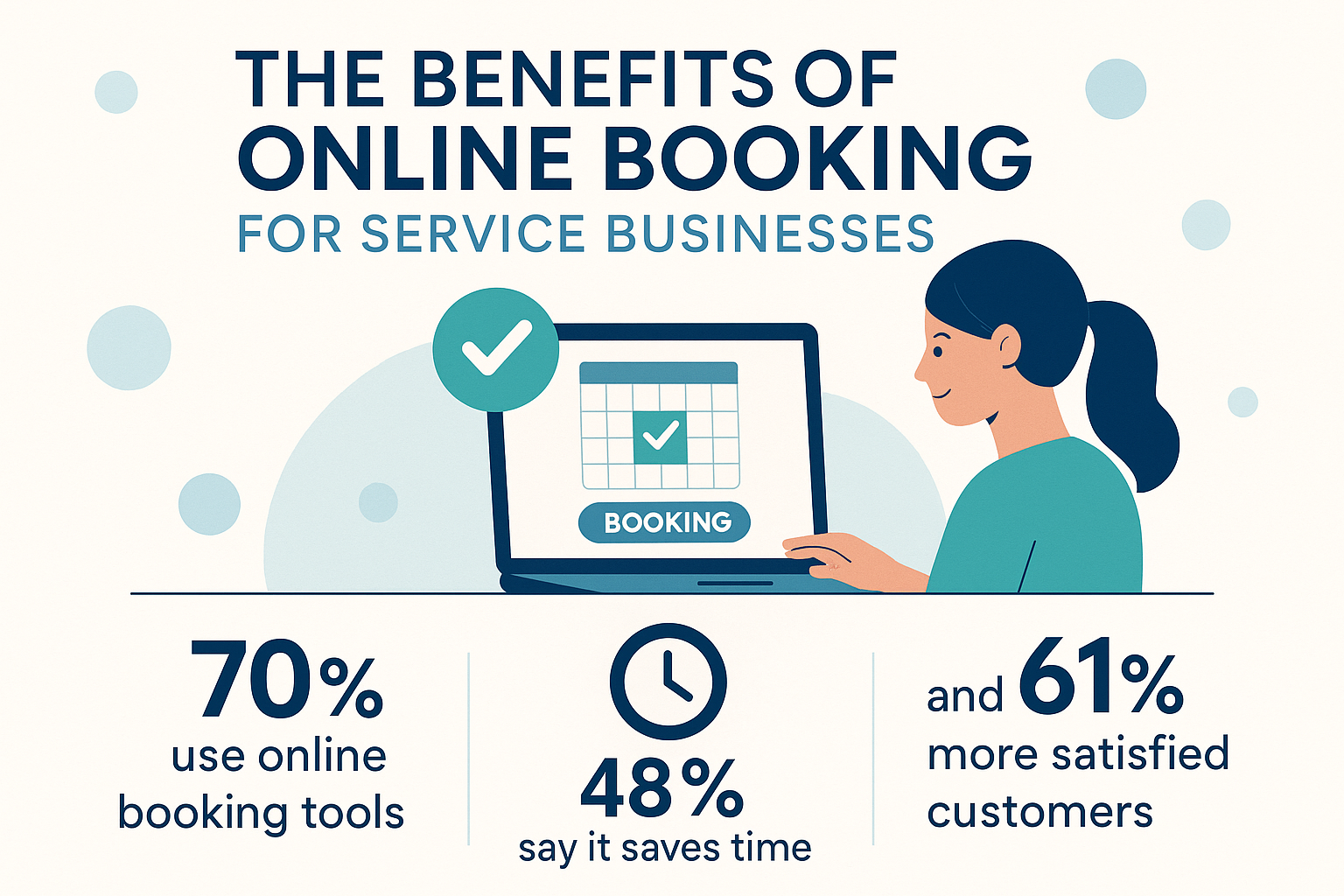
The impact of online booking on service-based businesses. This infographic visually demonstrates the advantages that online booking systems offer to service businesses, making it easier than ever for customers to access appointments and services seamlessly.
-
Future Ready Digital Solutions for Business Growth
Future ready digital solutions help businesses grow by combining web development, automation, secure systems, analytics, responsive design, and scalable technology into a practical long-term platform.
-
Streamlining Operations with Web Based Tools
Web based tools can streamline operations by reducing repetitive tasks, centralizing data, improving communication, and connecting important business processes through practical digital solutions.
-
E Commerce Solutions for Businesses Selling Online
E-commerce solutions help businesses sell online by combining product pages, secure checkout, inventory structure, payment flows, and responsive design into one reliable digital experience for customers.
-
Custom Development for Companies That Outgrow Templates
Custom development becomes valuable when templates cannot support unique workflows, integrations, branding needs, or growth plans, giving companies a tailored digital solution that fits their real business process.
-
How Digital Solutions Help Startups Launch Faster
Digital solutions help startups move from idea to launch with practical websites, automation, analytics, and scalable tools that reduce manual work while creating a professional digital footprint from the beginning.